Living Against the Grain:
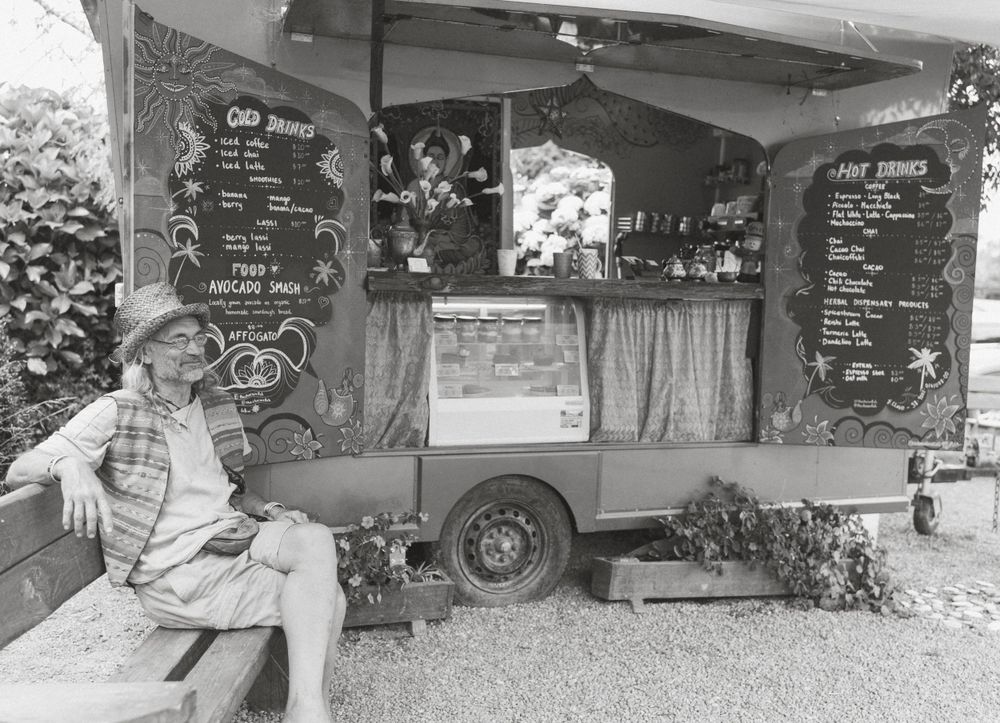
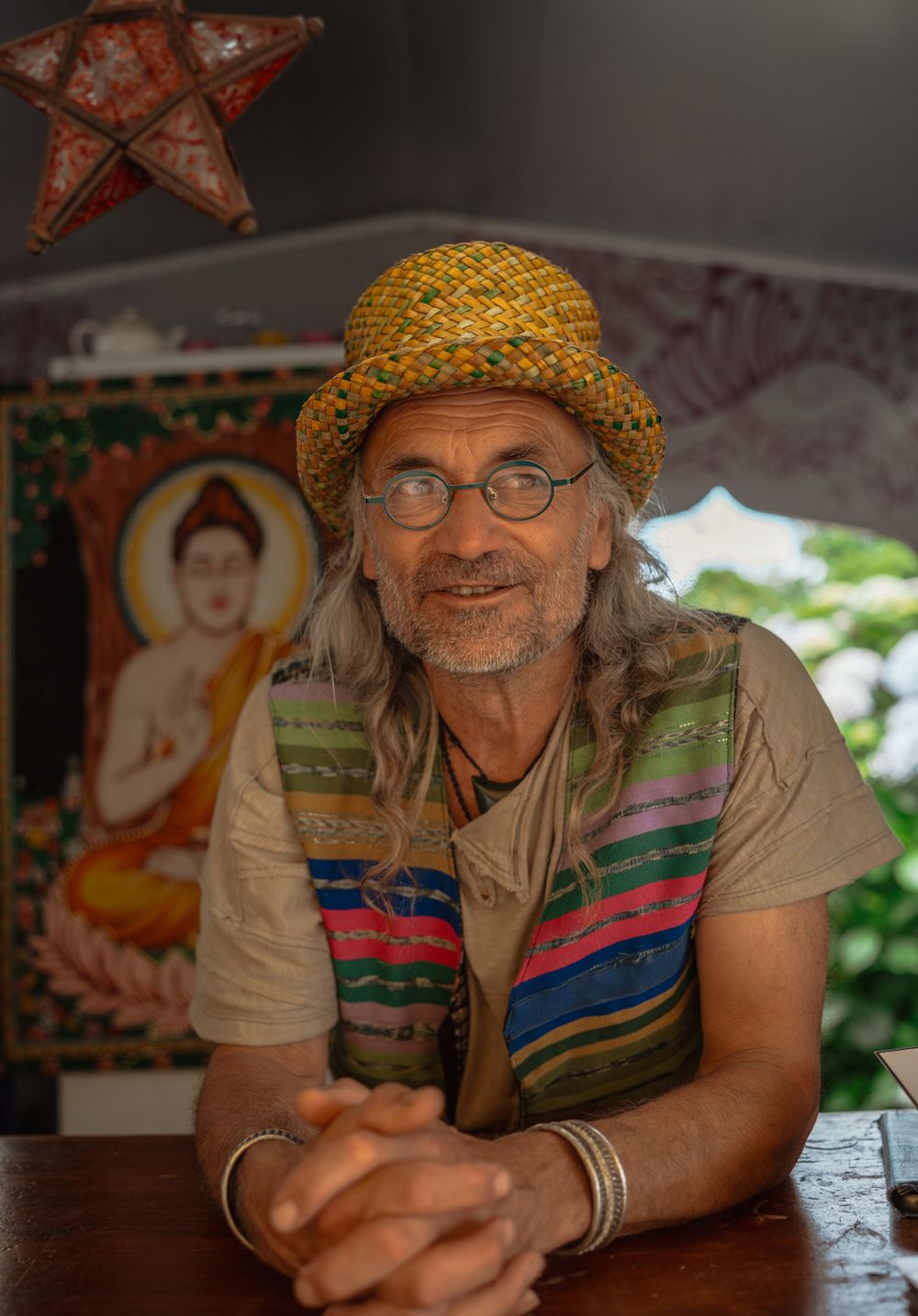
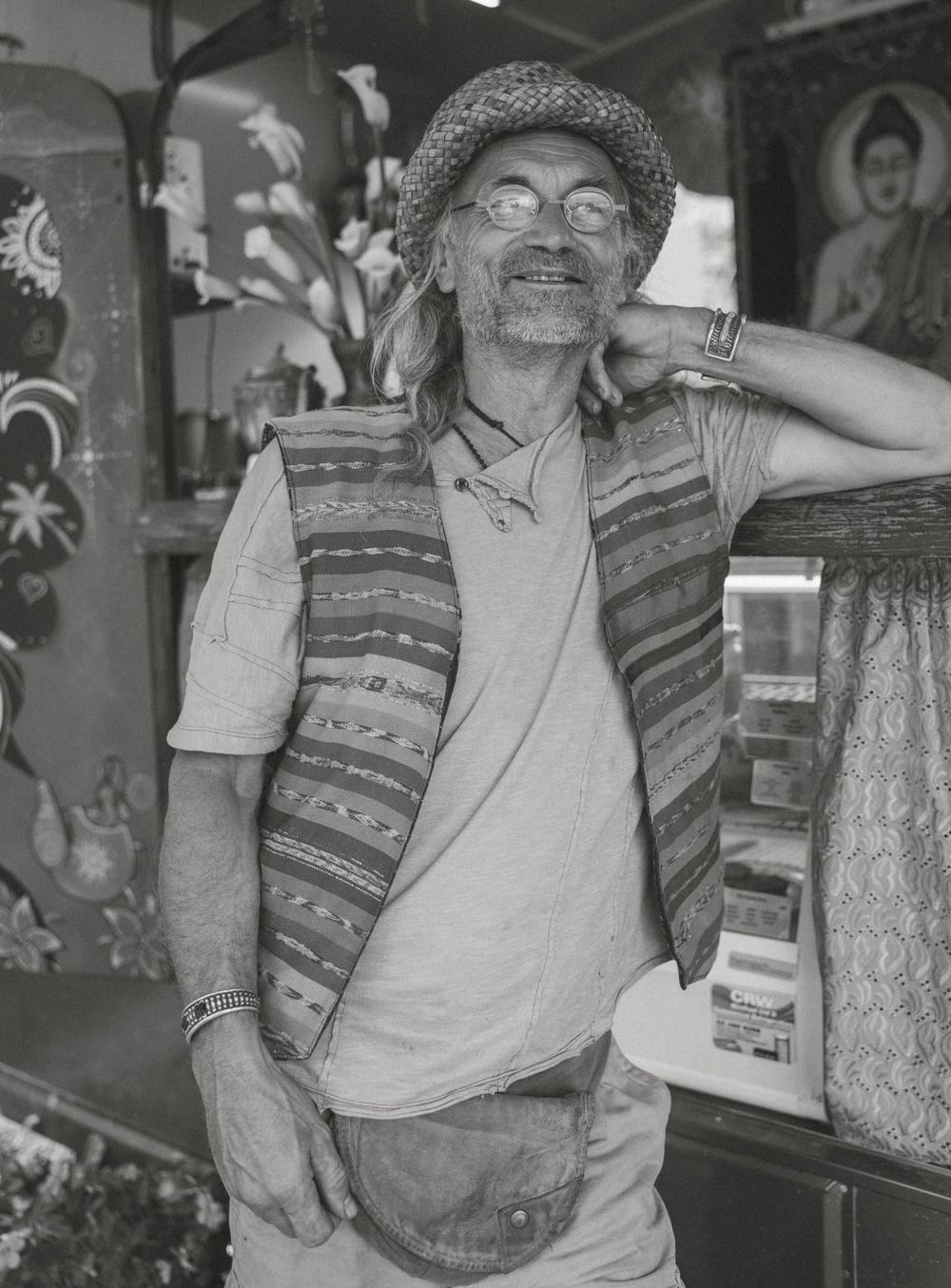
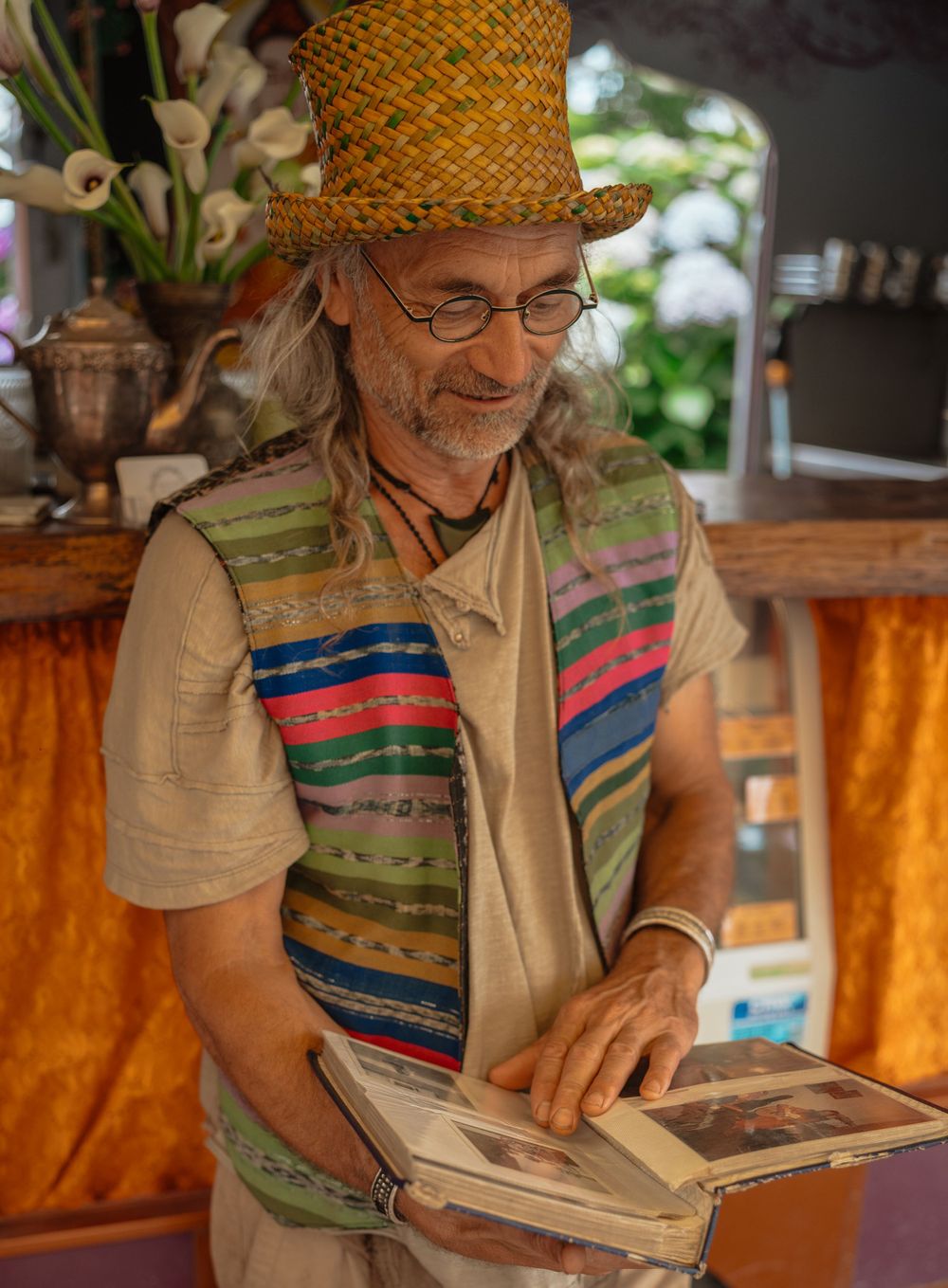
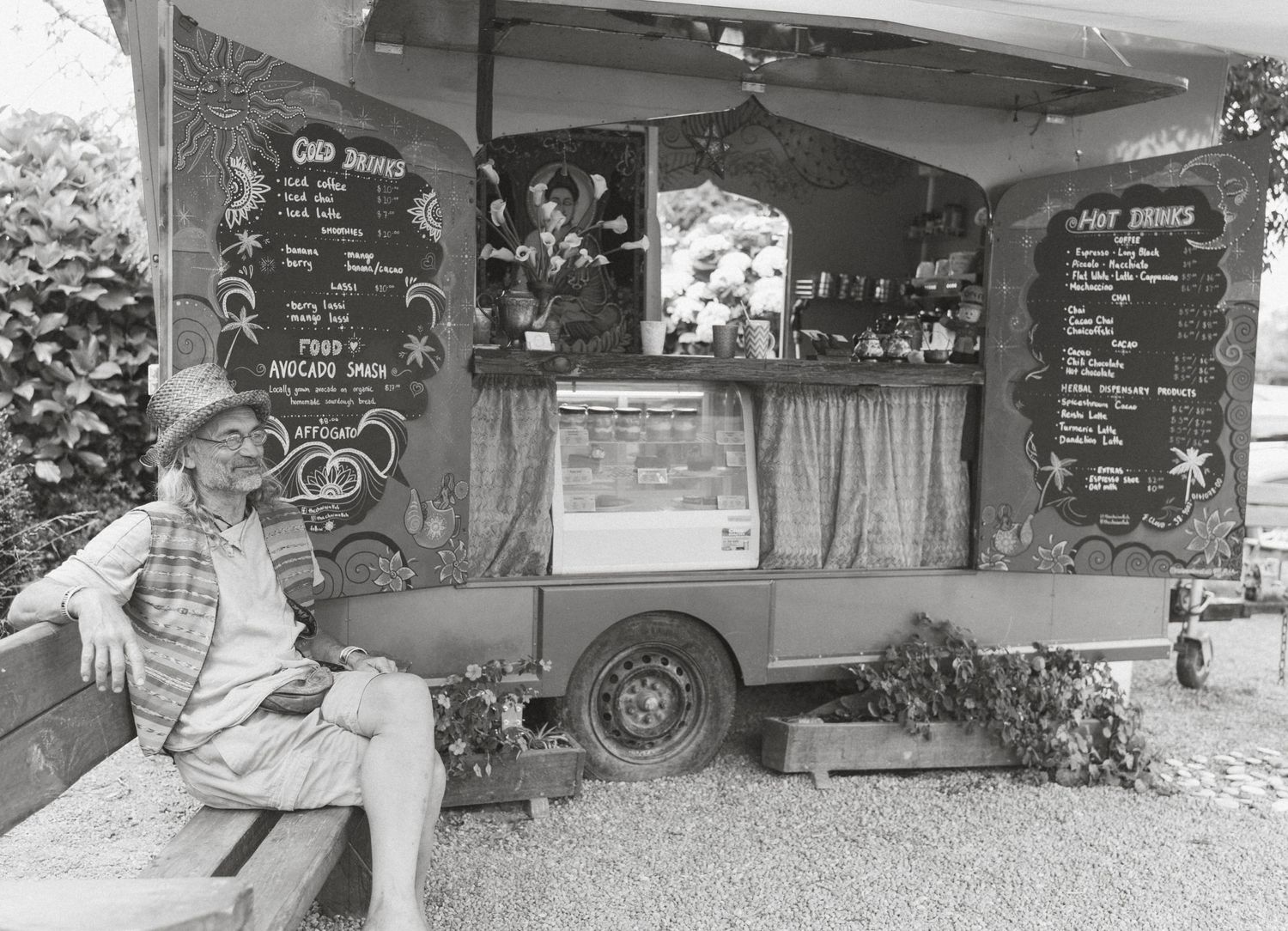
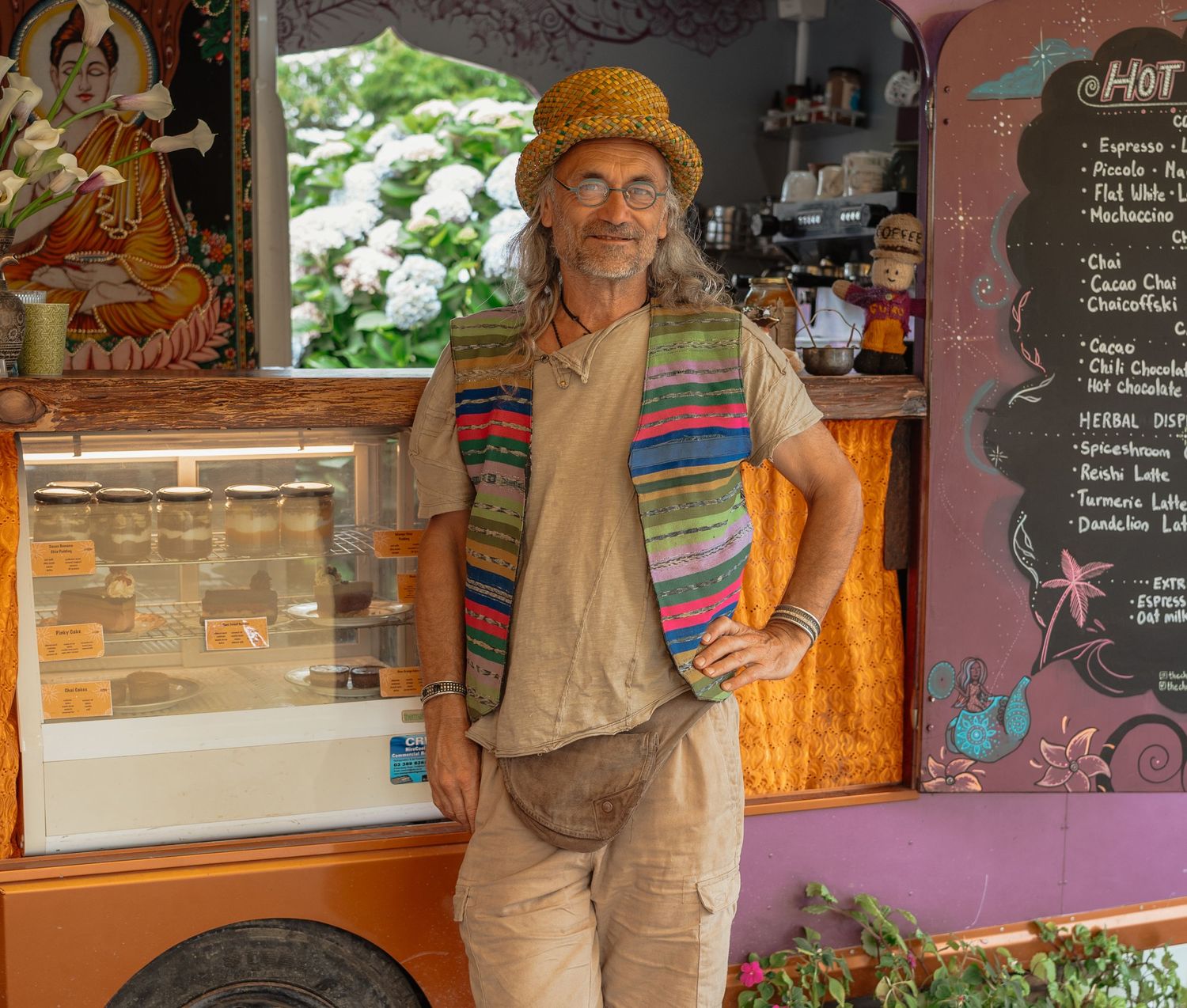
I chatted with Jyoti at his Chai Wallah café in Raglan. He lives off the grid in his house bus. I often walk past his café and see some of the same people sat outside his chai van, chatting over a cup of something warm.
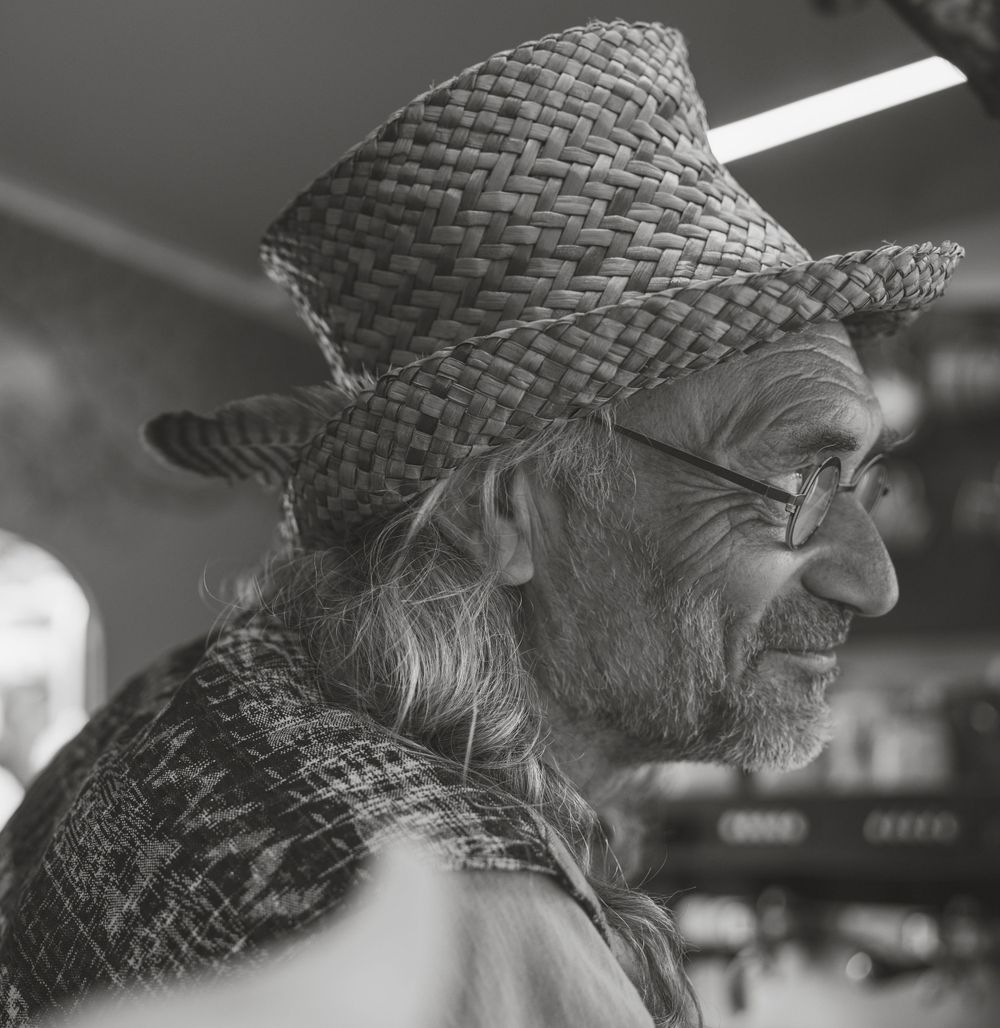
Jyoti is one of those people who was born to live against the grain; there was never going to be another path for him.
The Early Years...
When I look back on my life, I realise rebellion started early. I had a tough childhood, and it put me in an insular state. By the time I left home at 17, I had developed a strong sense of a need to escape.
I got into marijuana and got caught growing it on the farm I was working for, so I got kicked out. I didn't even like farming, and it was brutal. I did some laboring jobs, but I wasn't really into it.
Then, I came to Auckland and started doing some engineering work. I was good, and I was enjoying it. But, you can't smoke on the job, so eventually I kept getting moved on. I was really addicted to the state of happiness, I think, and marijuana gave me that.
Love...
When I was 19, I met a girl who completely changed my perspective. She was a free spirit. She had cystic fibrosis and was a real hippie. I had no idea about that kind of life until I met her.
She just taught me how to be different, taught me that different is good. You know, there's more than one way to be. She was so out there, doing it. She reminded me of Stevie Nicks. And so I was in love with Stevie Nicks.
She was a real rebel. But really cool. Long hair, long earrings, long dresses, colorful.
And so I ended up the extreme hippie at a young age.
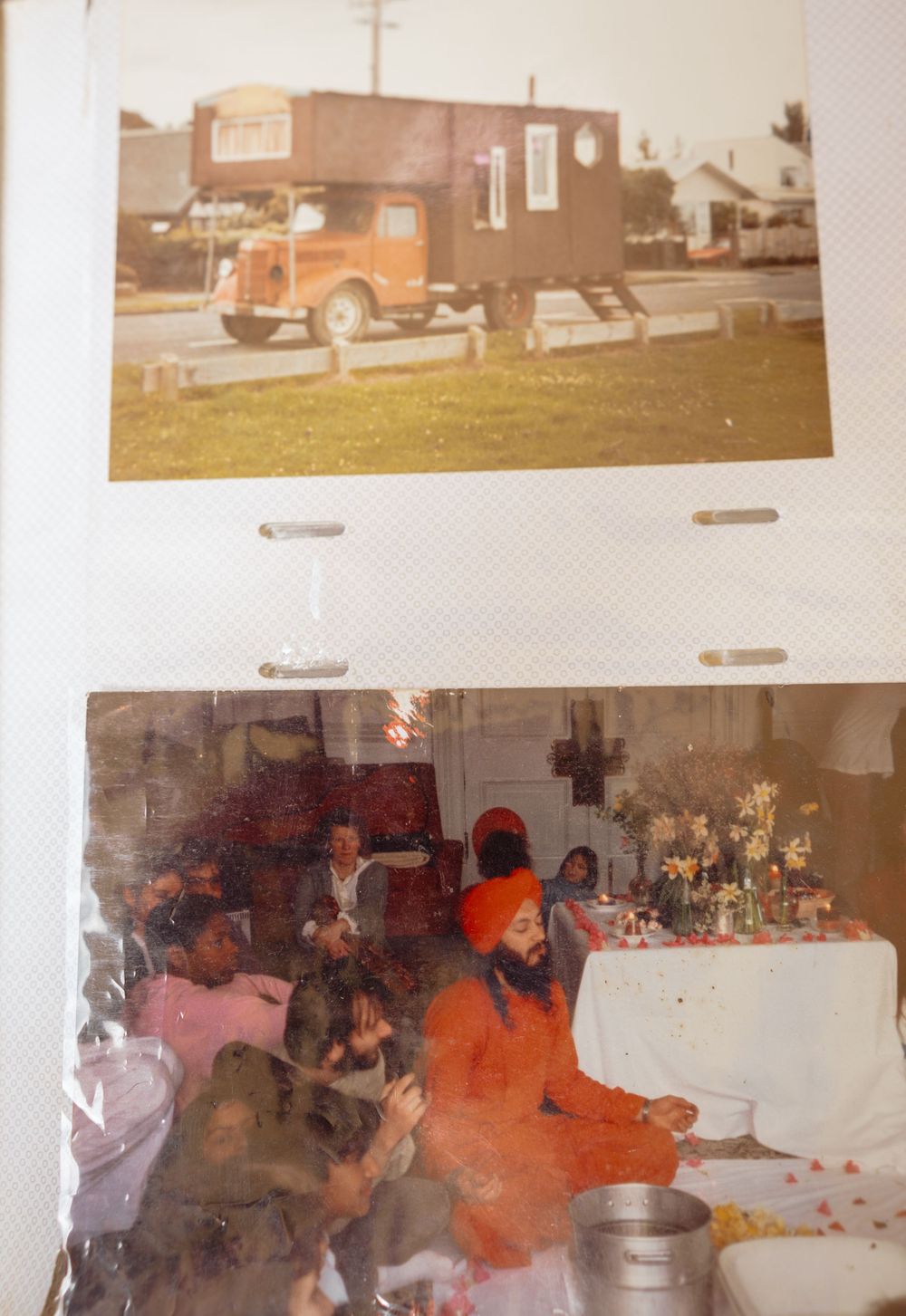
We bought a house truck and spent time traveling across New Zealand, living like gypsies. She was really sick, so she’d have to spend months at a time in the hospital, where I would stay with her until we could go on the road again.
We split up at one point. I went on my own. But we met up again, a few months later, by chance in Auckland. We were at her house once, and a strange thing happened. A weird energy. The house was shaking, and she’s like, "Can you feel that?" Doors slammed open, and I was frozen in place. She walked toward the door, stared down the darkness, and closed it. I had an out-of-body experience, experiencing an entity and paralysis. It was both terrifying and enlightening.
Spiritual Awakening...
That experience started me on a journey of spiritual exploration. I was led to meet with a Scientologist, who was frustrated that I would accept his ideas of scientology so he told me I should go and meet the Ananda Marga and learn meditation from them. After weeks of searching, I finally found them at a market in Auckland, and a monk initiated me into a daily meditation practice that I’ve followed for over 40 years.
In 1986, I traveled to India to visit my guru. I went again in '87, and by '88, I had made up my mind—I wanted to be a monk. The decision wasn't easy, but it was one that shaped the course of my life.
Monkhood...
When I wanted to become a monk, the other monks were like, “Nah, nah, nah, not you. Why do you want to become a monk?” I was frustrated, and I was like, "I want to do social service." “Oh, you don’t need to be a monk to do social service.” They were recruiting for monks, but they wouldn’t let me become one. I was just different from everyone.
It wasn’t until a senior monk advised me to simply express my wish to be closer to Baba, the Guru. Then things began to shift. During a meditation, I was eventually called to a meeting where the Guru himself had told the senior monks to allow me to become a monk.
After gaining permission, I left New Zealand to train as a monk in the Philippines. I then lived as a monk in England. I spent four years there, fully immersed in the life, before leaving in 1994.
Leaving...
“Why did you leave?”
It wasn't because I lost faith, but the organization itself was struggling. Our guru had passed away in 1990, and with that came a leadership crisis. As a young man, I couldn't handle the chaos, so I left. But, I didn’t walk away from the principles of monkhood. I still live by them every day.
I moved to the Philippines and worked for a company selling TV equipment, because, during my monk period, a few of the New Zealand and Australian monks secretly started smuggling TVs from Singapore to India. We were just doing this and giving all the money to the children's homes and the schools—primary schools and nursery schools—that we had around the world. We were funding them as much as we could.
“So, even as a monk, you were breaking the rules and ‘going against the grain’?”
Absolutely, I was a rule breaker.
Marriage...
The transition from a monk to a regular life wasn’t easy. It was, in fact, harder than becoming a monk in the first place. I suddenly found myself navigating the complexities of family life. I married a woman from the Philippines and had kids.
I went from living a simple life to suddenly being part of a wealthy family. My wife came from a privileged background, and that contrast hit me hard.
When she introduced me to her family, it was a massive drama because I was poor. Her mother hired a private investigator to look into me.
My marriage turned out to be harder than I had ever imagined. After marrying into a wealthy family, things spiraled out of control. I was faced with a legal battle in the Philippines, having to forge documents to marry. This led to even more complicated issues when we decided to leave for New Zealand. The situation caught up with me in ways I never expected.
Before I knew it, I was in a whirlwind of legal and personal drama with my wife. This wasn’t my karma. In the end, my wife and I divorced.
Finding peace back in NZ...
As my life continued, I realized how much I had strayed from my original path. Now, years later, I’ve found peace in places I never expected. I live in New Zealand, where I have worked at festivals, making chai and coffee, and offering a "safe space" for those who need it. But I stepped away from the festival scene recently.
I know my kids are happy. They’re now in their 20s and 30s. They're having a good life. I'm just glad that the kids are fine.
“So, have you always felt like you're different from everyone around you? As you struggled to follow the rules of work, monkhood, marriage, and even the law at times?”
Yeah, I've always felt different.
“And has that been good or bad? How does it make you feel?”
Never been bad, no. It's always been good; it's been special, yeah. It's been like a blessing.
Follow your intuition...
"What have you learnt from living against the grain? What's your life lesson"
My life lesson is to follow your intuition, and not what someone tells you is right, if it doesn't feel right. Intuition comes from a higher source, divine truth that guides you to your true path. Never fear that divine truth.